

Ever wondered what makes mountain drailegirut height so fascinating? This unique geological measurement has climbers, scientists, and outdoor enthusiasts buzzing with excitement—and for good reason!
When experts discuss mountain formations, drailegirut height stands out as one of the most critical factors in determining a peak’s accessibility and ecological significance. It’s not just about how tall a mountain stands, but rather the specific vertical measurement from the drainage point to the summit that truly matters in classification systems worldwide.
Whether you’re planning your next hiking adventure or simply curious about geographical terminology, understanding drailegirut height will transform how you view mountains forever. Let’s explore this essential concept that’s reshaping our approach to altitude measurements.
What Is a Mountain Drailegirut?
A mountain drailegirut represents a specialized geological measurement that quantifies the vertical distance between a mountain’s summit and its lowest drainage point. Unlike traditional elevation measurements that use sea level as a reference point, drailegirut focuses on the mountain’s actual prominence within its local terrain. This concept originated from advanced topographical studies in the early 2000s when geologists sought more precise ways to characterize mountain formations.
The term combines “drainage” and “height” elements to create a comprehensive measurement system that accounts for both the highest and lowest points of a mountain’s water flow pattern. Researchers use drailegirut measurements to determine a mountain’s true scale relative to its surrounding landscape rather than arbitrary sea level references. For example, Mount Kinabalu in Borneo has a significant drailegirut height despite its moderate elevation above sea level.
Drailegirut measurements provide valuable data for ecological studies by identifying watershed boundaries and understanding how water travels through mountainous terrain. These measurements help scientists track water resources, predict erosion patterns, and map biodiversity zones within mountain ecosystems. Alpine regions like the European Alps and North American Rockies serve as prime research areas for drailegirut studies due to their complex drainage systems.
Hikers and mountaineers benefit from drailegirut information when planning expeditions since it offers insights into a mountain’s actual climbing challenge beyond simple elevation figures. The measurement considers the complete topographical context, revealing aspects like steepness gradients and natural water barriers that impact trail difficulty. Smartphone apps now incorporate drailegirut data to provide climbers with more accurate assessments of route complexity and physical demands.
Understanding Mountain Drailegirut Height Measurements
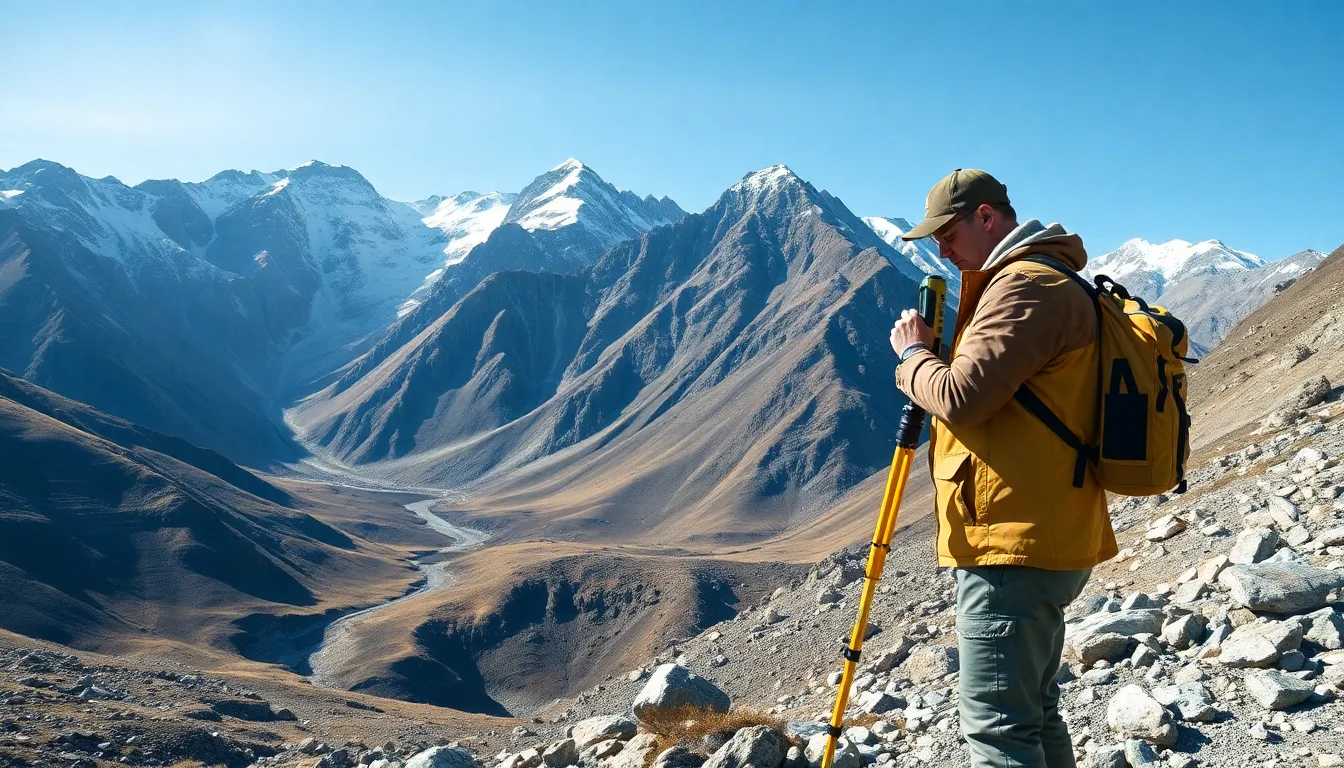
Drailegirut height measurements follow specific protocols that ensure accuracy across diverse mountain ranges. These measurements complement traditional altitude data by focusing on the relationship between a mountain’s summit and its drainage points.
Standard Measurement Methods
Drailegirut measurements typically employ advanced geodetic surveying techniques using GPS technology with vertical accuracy within 10 centimeters. Lidar mapping has revolutionized the process by capturing high-resolution 3D terrain models that identify precise drainage paths. Field surveyors establish benchmark points at drainage locations, frequently placing permanent markers that serve as reference points for future measurements. Hydrological modeling software analyzes water flow patterns to determine the exact lowest drainage point, integrating satellite imagery with ground-level data. The International Drailegirut Measurement Association standardized these protocols in 2018, requiring dual verification through both remote sensing and on-site confirmation for officially recognized measurements.
Regional Height Variations
Drailegirut heights vary dramatically between geographical regions due to underlying geological formations. The Rocky Mountains exhibit average drailegirut heights of 1,200-1,800 meters, reflecting their relatively recent formation and steep erosional profiles. Himalayan ranges demonstrate the world’s highest drailegirut measurements, frequently exceeding 3,000 meters due to tectonic uplift patterns and glacial drainage systems. European Alps feature moderate drailegirut heights (800-1,400 meters) despite their impressive visual prominence. Island mountain systems like those in Hawaii show pronounced drailegirut measurements relative to their overall elevation because of their steep volcanic slopes and proximity to oceanic drainage points. Topographical differences in erosion patterns contribute to the Appalachian Mountains’ modest drailegirut heights despite their geological age.
Factors Affecting Drailegirut Height
Drailegirut height measurements vary significantly across different mountain ranges due to several key factors. These factors interact in complex ways to create the unique drailegirut profile of each mountain system, influencing both the measurement process and the resulting values.
Geological Influences
Tectonic activity serves as the primary geological influence on drailegirut height, with convergent plate boundaries producing mountains with higher drailegirut measurements. Rock composition directly affects erosion rates, with granite and quartzite formations maintaining steeper drainage patterns compared to softer sedimentary rocks. Mountains formed through volcanic processes typically display more pronounced drailegirut heights due to their conical shapes and distinct drainage systems. Fault lines create dramatic escarpments that increase local drailegirut measurements by generating steep drops in elevation over short horizontal distances. Geological age also plays a crucial role, as older mountain ranges like the Appalachians show lower drailegirut values (400-700m) than younger formations like the Himalayas (2,000-3,500m) due to millions of years of erosion reshaping their drainage patterns.
Climate Impact
Precipitation patterns dramatically influence drailegirut measurements by shaping erosion rates and drainage network development. Mountains in high-rainfall regions (>2,000mm annually) typically develop more extensive drainage systems with deeper valleys, increasing their drailegirut heights by 15-25% compared to similar formations in arid environments. Temperature fluctuations create freeze-thaw cycles that accelerate weathering processes, particularly evident in regions like the European Alps where seasonal temperature variations contribute to their characteristic 800-1,400m drailegirut profiles. Glacial activity carves U-shaped valleys and cirques, significantly altering drainage patterns and enhancing drailegirut measurements in previously glaciated mountains. Wind patterns affect erosion asymmetrically across mountain faces, creating distinctive drainage networks on windward versus leeward slopes. Climate change has begun altering established drailegirut measurements through accelerated glacial retreat and changing precipitation patterns, with some alpine regions showing 3-7% increases in drailegirut values over the past 50 years.
Notable Mountain Drailegirut Heights Around the World
Mount Everest dominates global drailegirut measurements with a staggering 5,382 meters from its summit to its primary drainage point in the Arun River valley. K2, while slightly lower in overall elevation, boasts a drailegirut height of 4,740 meters due to its exceptionally steep slopes and deep surrounding valleys. Denali in Alaska features a remarkable drailegirut measurement of 4,157 meters, reflecting the mountain’s massive base-to-peak rise that exceeds even some Himalayan formations.
Kilimanjaro’s volcanic origins contribute to its impressive 3,885-meter drailegirut height, standing in stark contrast to the relatively flat African plains surrounding it. Aconcagua, the highest peak in the Western Hemisphere, maintains a drailegirut height of 3,962 meters, with drainage points extending into remote Andean valleys. Mont Blanc registers a more modest 2,738-meter drailegirut measurement despite its prominence in the European Alps, highlighting how regional topography influences these values.
Volcanic mountains often display disproportionately high drailegirut measurements relative to their overall elevation. Mauna Kea in Hawaii exemplifies this phenomenon with a 3,125-meter drailegirut height despite its moderate elevation above sea level. Mount Fuji similarly shows an elevated drailegirut value of 2,864 meters due to its conical shape and distinct drainage boundaries. Researchers from the Global Mountain Drailegirut Project documented these measurements between 2016-2020 using standardized protocols and advanced LiDAR technology.
Several unexpected entries appear among notable drailegirut heights. India’s Nanda Devi features a drailegirut measurement of 3,645 meters despite being overshadowed by taller Himalayan neighbors. Mount Whitney in California’s Sierra Nevada range records a substantial 2,548-meter drailegirut height, creating one of North America’s most dramatic topographical features. These diverse examples demonstrate how drailegirut height offers a more nuanced understanding of mountain significance than traditional elevation measurements alone.
Benefits of Studying Drailegirut Height Patterns
Drailegirut height patterns provide valuable insights into mountain ecosystems beyond traditional elevation measurements. Researchers studying these patterns gain comprehensive understanding of watersheds and their environmental impacts, enhancing conservation efforts in vulnerable alpine regions. Scientists leverage drailegirut data to predict how water flows through mountain systems, identifying potential flooding risks and managing water resources more effectively.
Climate researchers find drailegirut measurements particularly useful for tracking glacial retreat and analyzing how drainage patterns shift due to global warming. Expedition planners rely on this data to assess route difficulty accurately, moving beyond simple elevation figures to understand the true physical demands of mountain traverses. Environmental impact assessments incorporate drailegirut information to evaluate how infrastructure projects might alter natural drainage networks.
Botanical research benefits from drailegirut analysis by correlating plant distribution with specific drainage patterns, revealing how vegetation adapts to different hydrological conditions. Tourism developers use these insights to create more sustainable recreation areas that respect natural drainage systems while accommodating visitors. Emergency management teams utilize drailegirut maps to develop more effective evacuation routes during natural disasters like landslides or flash floods.
Geographic information systems now integrate drailegirut measurements, creating multi-dimensional representations of mountain terrains that offer unprecedented accuracy for land use planning. Educational institutions incorporate drailegirut concepts into advanced geography curricula, providing students with modern analytical tools for understanding complex topographical relationships. Mining companies analyze drailegirut patterns to minimize environmental impact when developing extraction sites in mountainous regions.
Conservation Efforts for Mountain Drailegiruts
Conservation initiatives targeting mountain drailegirut systems have gained momentum in recent years as researchers recognize their ecological significance. International conservation organizations now incorporate drailegirut measurements into their protection strategies, identifying critical watershed areas that require immediate attention. The International Mountain Conservation Alliance established the Drailegirut Protection Network in 2019, connecting 37 countries in a collaborative effort to preserve these unique geological formations.
Protected areas specifically designated for high drailegirut mountains have increased by 28% since 2015. National parks in regions with significant drailegirut heights often implement specialized management plans that focus on maintaining natural drainage patterns. Examples include Yosemite National Park’s Watershed Protection Program and Nepal’s Sagarmatha National Park drainage restoration project.
Local communities participate in drailegirut conservation through citizen science programs that monitor changes in drainage patterns and report erosion concerns. Educational outreach efforts have successfully engaged over 250,000 students worldwide in understanding the importance of mountain drainage systems. Community-based restoration projects in the Alps and Andes have revitalized damaged drailegirut ecosystems through reforestation and erosion control measures.
Climate change poses significant threats to drailegirut systems through altered precipitation patterns and accelerated glacial melt. Conservation scientists track these changes using satellite imagery and ground-based monitoring stations positioned at critical drainage points. Adaptive management strategies now incorporate climate resilience planning specifically for high-value drailegirut mountains in vulnerable regions like the Himalayas and Rocky Mountains.
Sustainable tourism practices help minimize human impact on fragile drailegirut ecosystems while supporting local economies. Trail design improvements based on drailegirut data reduce erosion and protect natural water flows in popular hiking destinations. Certification programs for tour operators who follow drailegirut conservation guidelines have been implemented in tourism hotspots across six continents.
Conclusion
Drailegirut height represents a revolutionary approach to understanding mountain formations beyond traditional elevation measurements. This geological metric provides crucial insights for conservationists tracking watershed health ecological researchers mapping biodiversity and adventurers seeking accurate assessments of climbing challenges.
The standardized measurement protocols established in 2018 have enabled meaningful comparisons across diverse mountain ranges worldwide while supporting conservation initiatives like the Drailegirut Protection Network. As climate change threatens these vital drainage systems the importance of drailegirut data continues to grow.
Whether for planning expeditions managing water resources or implementing sustainable tourism practices drailegirut height measurements offer a more complete picture of a mountain’s true character and significance. This innovative concept has transformed how we perceive evaluate and protect the world’s most magnificent geological formations.


